
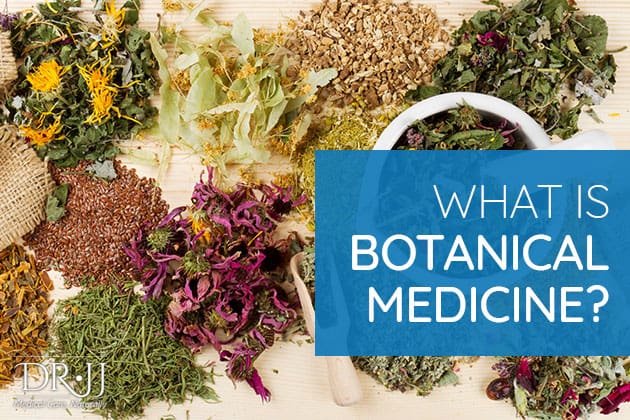
Botanicals are what our ancestors used as medicine.
There’s evidence for them as far back as there are records, and almost certainly further.
Ancient Chinese writings even date back the use of herbal medicine to potentially even earlier than 3000 B.C.E..
Many different cultures in different areas of the world use herbal medicine.
Similar plants were typically used for the same purposes.
The use of botanical medicine is still popular to this day.
In fact, the World Health Organization estimates that over 80% of people use traditional medicine for some aspect of health.
Many of my clients first come to see me, unaware that one of the most interesting and useful facets of naturopathic medicine is botanical medicine.
Below, I’ve also included my video on botanical medicine, where I explain what it is and its many benefits.
What Is Botanical Medicine?
Botanical medicine is also referred to as herbal medicine, herbal products, or phytomedicine.
It is one of the many forms of naturopathic medicine.
Botanical medicine is characterized by plants and herbs that are put into a form that we can use for therapeutic purposes, either by eating them or by applying them to the skin.
Herbal products may contain whole plants or parts of plants.
For example, botanical medicine can be taken as tea, as the raw herb itself, or as a tincture (you can either get tinctures in alcohol or in capsules).
It can also be applied to the skin through a lotion, gel, or cream.
These herbs aid in providing treatment for many ailments.
Although scientists are not exactly sure how these plants work to treat specific illnesses.
There may be many ingredients in some herbs that work together to produce the desired effect.
The environment usually determines the effectiveness of a particular herb.
Climate, the presence or absence of bugs, soil quality, and harvest time can all impact how effective a particular herb is.
An interesting fact about pharmaceuticals is that around 35% of them come from plants.
Drug companies basically started with plants and built their medicines up from there.
Some common examples of herbal medicine include:
- White willow, used in aspirin
- Foxglove, used in digitalis (for congestive heart failure)
- Belladonna, used in atropine
- St. John’s Wort, used to make prozac
- Echinacea
- Ginseng
- Ginkgo (Ginkgo biloba)
- Elderberry
- Turmeric
- Ginger
- Valerian
- Chamomile
- Garlic
Who Prescribes Botanical Medicine?
Botanical medicine is prescribed by naturopathic doctors, herbalists, doctors of Chinese medicine, and some medical doctors, though not many.
People mistakenly think that because it’s natural, it can’t hurt you.
However, plants can be very potent and can most definitely interact badly with each other and with drugs you may be taking.
It does take an experienced medical professional to be able to safely recommend the right botanical combination and dosage to a patient.
You don’t want your condition to become worse, or for your medications to stop working because of negative interactions with a specific herb you may take.
Make sure you consult with a professional trained in the area of herbal medicine before trying any herb, so that they can guide you on what the right herbs are for you.
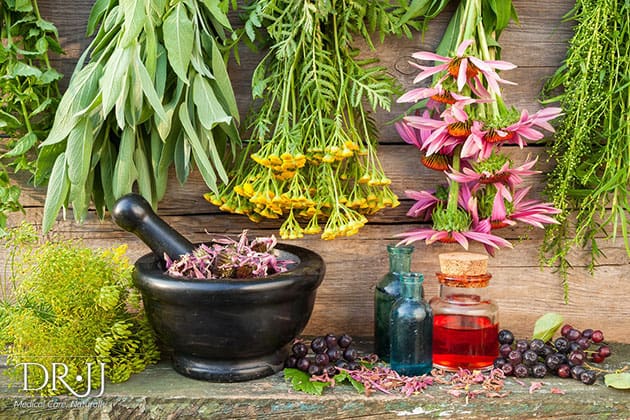
What Types Of Conditions Is Botanical Medicine Good For?
Botanical medicine can be used for anything you use pharmaceutical drugs for.
There will always be a botanical equivalent that I can prescribe for your condition(s).
There may be a number of different herbs that can all help provide treatment for the same condition.
For instance, there are a number of different herbs used to provide treatment for erectile dysfunction.
Botanical medicine is also one of the many natural solutions for cancer.
There are also some specific herbs that can help with providing treatment for multiple different conditions.
For instance, aloe can be spread across different types of minor burns, including sunburn, skin irritations, and inflammation.
I typically also recommend Arnica for the treatment of different sports injuries, such as bruises, sprains, sore muscles, and joints.
Chamomile tea can be used as a treatment option for many different conditions, including:
- Upset stomach
- GERD
- Indigestion
- Digestive issues
- Insomnia
RELATED: Sleep Problems & Optimal Sleep Solutions.
Garlic can be used to:
- Reduce cholesterol and blood pressure
- Providing treatment for fungal infections and colds
- Help with ear infections
- Provide natural treatment for the herpes simplex virus
- Aid in the prevention of colorectal cancer
- Manage symptoms of thunderclap headaches
Turmeric is great for:
- Providing treatment for inflammation
- Diet when you have gallbladder stones
- Protection against cancer
- Alzheimer’s disease
- Providing treatment for alcohol-related liver disease
- Providing treatment for multiple sclerosis
There are also some herbs that work well in providing treatment for one or a few conditions:
- Lemon balm (Melissa officinalis) and bugleweed (Lycopus europaeus) can help with providing treatment for hypothyroidism
- Valerian can be taken as tea or in capsule form for sleeping problems
- Like garlic, mullein is used to provide treatment for colds, and it can be taken by mouth for chest congestion or dry, bronchial coughs
- Tea tree oil can be applied for fungal infections such as athlete’s foot
- Ginseng can help you reduce stress naturally
- The herb butterbur can act as a natural remedy for allergies
How Do I Know Which Botanical Medicines To Take?
You do need to make sure you don’t start prescribing yourself botanicals without talking to a naturopath.
Consider herbs to be drugs and consult a naturopath to find out what herbs would be best suited for your specific condition or disease.
Different herbs work for different conditions, and some herbs may be better than others.
You also want to understand if any pharmaceuticals you’re currently taking may interact negatively with a specific herb or if there are herbs that may interact negatively with each other.
Having said that, many people will pick up Echinacea when they’re sick, as that particular one is pretty safe, as well as peppermint, garlic, aloe, and a few others.
If you experience side effects while taking a particular herb, such as nausea, headaches, or a rash, stop using the herb..
Where Do You Get Botanical Medicines?
You can get botanicals at most health food stores, herbalist stores, and specialty stores.
You can also buy botanicals online.
When buying botanicals online, you want to make sure you know the specific brand recommended by your doctor so that you don’t end up with something that’s not been properly tested or vetted.
You also want to make sure you are getting the right dosage of a specific product, so speak to your doctor regarding this as well.
Questions? Ask Dr. JJ
Botanical medicine is a complicated topic that I spent years studying at school and have continued to learn about in my practice.
However, now all my knowledge and expertise are at your disposal.
You may be looking for a naturopathic doctor to find out what botanical medicines will work for you.
If you have questions about naturopathic medicine, or you’d like to take your first step into the world of naturopathy, contact me, Dr. JJ, ND,
I’m a naturopathic doctor in Toronto, and I’ll be happy to recommend the right combination of botanicals that are safe for your health, life, and conditions.
Book your appointment with me, Dr. JJ, today.
If you have questions about naturopathic medicine, or you’d like to take your first step into the world of naturopathy, contact me, Dr. JJ, and let’s book an appointment.
Yours in health,
Dr. JJ Dugoua, Naturopathic Doctor
600 Sherbourne St, Suite 315,
Toronto, ON M4X 1W4
-https://g.page/AskDrJJ
Dr. JJ Dugoua is a naturopathic doctor in Toronto and has a PhD in Pharmaceutical Sciences. His clinic provides solutions for many health concerns and has a special focus on thyroid health issues.