

In 2000, Toronto Maple Leafs defenseman Bryan Berard was hit in the eye by a hockey puck.
He was subsequently rushed off the ice and later and diagnosed with a retinal tear.
Berard’s sport injury was an unavoidable one, but there are plenty of ways you can help prevent or lower your risk of finding yourself in a similar situation.
These strategies are especially important during the colder months and their associated winter sports in Canada.
For instance, autumn is a common time for major sport events, such as marathons or triathlons.
And during the winter, many people spend their free time playing sports such as ice hockey or sledding.
Unfortunately, these fun seasonal activities can also bring a certain amount of risk.
According to The Government of Canada’s Health Infobase, winter sports are responsible for a significant number of head, face, eye, and dental injuries.
If you’re considering one of these events, make sure you’re ready.
Many people experience yearly injuries simply because they haven’t prepared themselves enough.
Even if you’re an aspiring athlete, and have lofty goals and a vigorous training plan, you might still consider checking in with a naturopathic doctor.
That’s because a naturopathic medicine can help athletes with all types of experience.
For instance, a naturopathic practitioner can help you create a meal plan that will help support your body as you exercise.
At my clinic, I also offer IV injections for athletes to help keep your body energized.
These naturopathic services can help you recover from sport injuries and even prevent them in the first place.
Last week, we talked about a naturopathic approach to recovering from sports injuries.
But the best way to recover from an injury is to not have gotten injured in the first place.
This article will take a closer look at the multitude of ways naturopathic medicine can accomplish this.
RELATED: All About Naturopathic Medicine
Or, if you prefer, feel free to watch the video below for more tips for preventing sports injuries.
How to Prevent Sports Injuries
According to Johns Hopkins Medicine, trauma and muscle overuse are the two most common culprits for sport injuries.
This trend rings true at my clinic as well.
Every year I see several people who have pushed their joints and muscles past their limits.
As a result, I thought it’d write an article to address these risks.
I’m also a bit of an athlete in my own right.
For example, I take part in the Ride to Conquer Cancer.
It’s a 250 km bike ride to Niagara Falls from Toronto to raise money for cancer.
So, I know the importance of mindfulness during physical activity, especially when going into an intense activity, or one that requires a lot of endurance.
Below are three quick tips that athletes and healthcare professionals alike recommend.
I would know, I’m both.
1. Stretching
First things first: remember to stretch.
And no, I’m not just telling you to do a quick warm up before your sports session.
Warming up before exercise is important, of course.
But there’s a difference between stretching and warming up, though some confuse the two.
They’re different, and the fact is that you need them both.
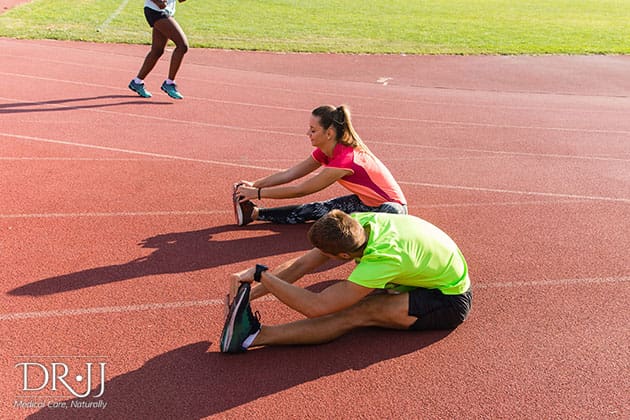
Stretching is when you hold a position of a muscle, in its lengthened state, for about 20 seconds.
Common stretches include the child’s pose, knee to chest stretches, and simple neck stretches.
In other words, stretches include a lot of the moves you see in things like yoga and Pilates.
Warming up means getting the big muscles moving, getting the heart pumping, and preparing your body for the real exertion of your sports or work out session.
See the difference?
Many people stretch before their physical activities.
And while that’s a beneficial practice, I recommend people also end their sport sessions with ample stretching.
Toss both into the mix for best results.
2. Know Your Limits
Knowing your limits plays a critical role in injury prevention.
Starting small and working your way up to bigger workouts is the best way to go.
A lot of us sit all week long and then do power workouts on the weekends hoping it’ll counteract that inactivity.
However, this practice can put you at greater risk for a sports injury.
You’ll want to gradually increase your training, both over time and over the course of your weekend.
For instance, if you haven’t gone for a run all week, don’t start with a half marathon first thing on Saturday morning.
Build up over the course of the week with a series of smaller workouts that keeps your body flexible and strong.
That way, you can handle your big weekend workout more easily.
3. Use The Proper Equipment
Your next step is to make sure you fully understand what equipment to use and how to use it.
You can research different equipment options and ask for tips from people with more experience.
Equipment refers to more than just the different machines at your gym.
It also includes things like the right type of clothing and footwear.
For instance, you’ll want to make sure everything fits correctly and provides the right kind of support for your body.
Another consideration is whether you may need an orthotic or some other accommodation.
For example, people who pronate when they run can find shoes that discourage this movement.
The right equipment will also vary depending on which sport your participating in.
For instance, bikers make sure their handle bars and seat are at the right height for their bodies.
This helps protect their necks and backs from injury.
Many people turn away from good quality sports equipment when they see the price tag.
However, it’s a real investment into both your enjoyment and, more importantly, your safety.
After all, uncomfortable or ill-fitting gear can make your life miserable.
But not as miserable as a serious sports injury.
4. Take Supplements
Lastly, I recommend certain supplements.
Sports supplements can provide you with a variety of great benefits.
Firstly, they can help you perform better.
Who doesn’t want that, right?
They also target specific issues, such as aches and pains following physical exertion.
At my clinic, we recommend a variety of supplements that help people through their athletic journeys.
For instance:
- Magnesium is great for muscle spasms
- Glucosamine can help lubricate joints
- Use arnica topically for bruises and muscle stiffness
- Proteozymes, which are enzymes that break down protein, are great anti-inflammatories
- Glutathione injections can help boost your immune system and detox your body
RELATED: Intravenous Therapy for Viral Immunity
This is only a few potential supplements that can help you prepare for your sporting event and boost your performance.
Talk to your naturopathic doctor to find out more.
Questions? Ask Dr. JJ
Are you thinking about taking up a new sport?
Are you starting to train for a marathon, or want to get more active in general?
If so, it’s a great time for a chat with me.
Call now to book a consultation with me, Dr. JJ.
At your first visit, we’ll go over your needs and come up with a specific plan for your unique circumstances.
We also provide virtual naturopath appointments for those interested in home appointments.
If you have questions about naturopathic medicine, or you’d like to take your first step into the world of naturopathy, contact me, Dr. JJ, and let’s book an appointment.
Yours in health,
Dr. JJ Dugoua, Naturopathic Doctor
600 Sherbourne St, Suite 315,
Toronto, ON M4X 1W4
-https://g.page/AskDrJJ
Dr. JJ Dugoua is a naturopathic doctor in Toronto and has a PhD in Pharmaceutical Sciences. His clinic provides solutions for many health concerns and has a special focus on thyroid health issues.